

The LH₂CRAFT prototype tank is taking shape as Gabadi advances fabrication and assembly activities under Task 7.4. With the supporting structure nearing completion, the work is preparing the prototype for inspection and the subsequent installation of its insulation layers and containment membranes.
Following material procurement, steel plates and structural beams were cut and prepared according to the engineering drawings. Reinforcing flat bars were produced using laser cutting.
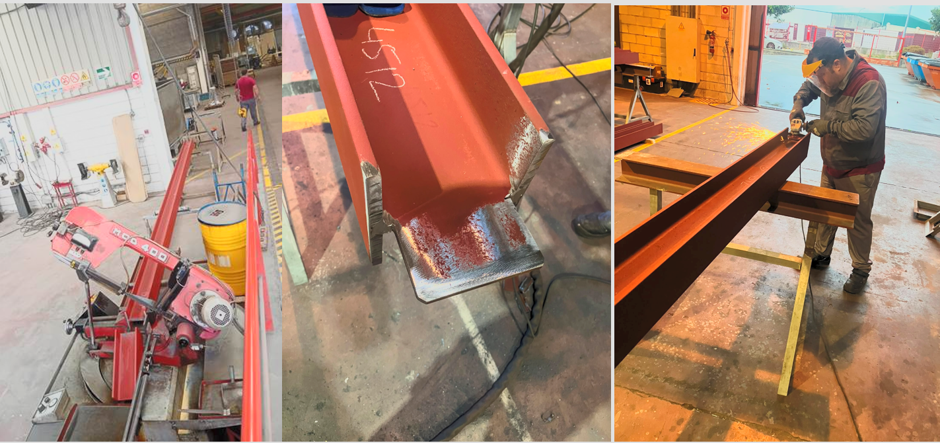
Cutting and preparation of steel beams for the LH₂CRAFT prototype tank’s supporting structure.
Assembly began with the inner-hull plates, which were cut to length and welded together to form the required internal surfaces.
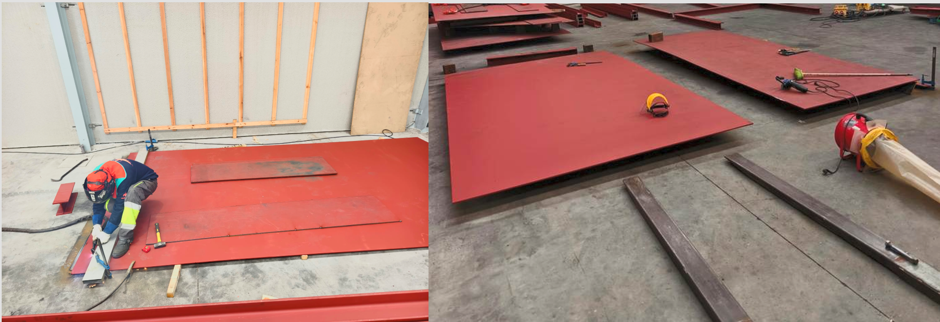
Preparation and welding of steel plates to form the prototype’s inner-hull surfaces.
In parallel, the supporting beam frames were assembled and welded. The corresponding inner-hull plates were then installed on the completed frames.
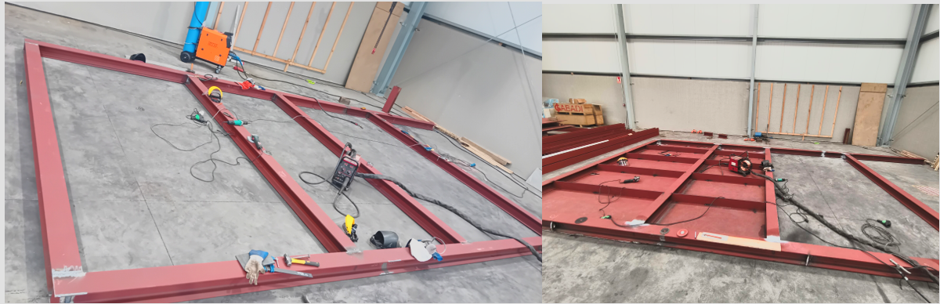
Assembly of the supporting beam frames and integration with the inner-hull plates.
The prototype is being constructed using a modular approach, with each wall manufactured separately before integration into the complete structure. Work is currently approaching installation of the final wall.
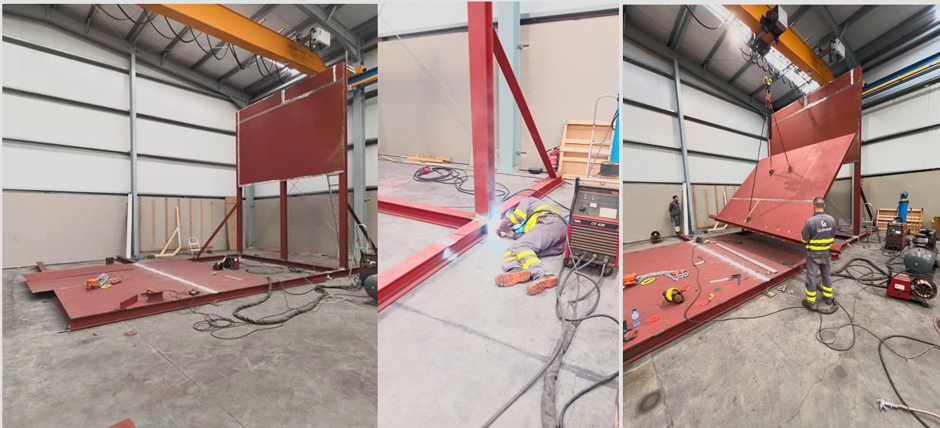
Lifting, positioning and welding of wall sections during modular assembly of the prototype structure.
After installation of the final wall, the remaining reinforcements and plate connections will be welded to complete the enclosed inner-hull structure. Gabadi’s personnel will then carry out magnetic particle inspection (MPI).
Once structural assembly is complete, Actemium will check the airtightness of the inner hull using vacuum-box testing on every weld. Following confirmation of tightness, the positions of the studs and insulation-panel supports will be marked in preparation for panel installation and bonding.
The gaps between the insulation panels will be filled with dedicated insulation blocks, known as Bridge Pads. A secondary stainless-steel membrane will then be welded to the support strips incorporated into the panels, enclosing the secondary insulation space. A further layer of panels and Bridge Pads will be installed above this membrane, followed by the primary stainless-steel membrane.
Actemium will examine the cargo-containment-system welds using vacuum-box and dye-penetrant testing to verify tightness between the individual containment spaces and the surrounding environment.
The prototype will provide practical experience to refine the existing manufacturing and assembly methodology. It will help the consortium identify construction challenges and potential improvements to the cargo containment system design. Subsequent testing by other LH₂CRAFT partners will assess the system’s behaviour, supporting the development of liquid-hydrogen cargo containment technology for marine transportation.


