LH₂CRAFT has achieved significant progress in the preliminary design of its innovative liquid hydrogen carrier, marking an important step towards enabling the safe, efficient and sustainable transportation of hydrogen by sea.
Within Task 4.1 – Preliminary Vessel Design, led by HYDRUS, the project team has advanced the early vessel design process, supported by hazard identification activities and the completion of high-level specifications for the Liquid Hydrogen Cargo Containment System (LH₂-CCS). These activities help ensure that safety, reliability and operational performance remain central to the vessel concept.
The design builds on the proven characteristics of modern large-capacity LNG carriers, while adapting them to the specific requirements of liquid hydrogen transportation. A key focus has been the optimisation of the vessel’s principal dimensions, including the investigation of a reduced design draught, taking advantage of liquid hydrogen’s lower density compared with LNG. Simulation-based modelling confirmed that this approach is technically feasible while maintaining performance, structural integrity and safety standards.
Using advanced naval architecture software and 3D modelling tools, the project team developed and refined a virtual representation of the LH₂ carrier.
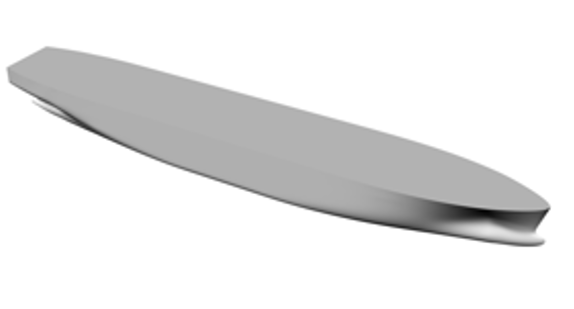
Figure 1. The developed 3D hull form of the LH₂ carrier
Further work focused on integrating the LH₂-CCS into the hull design, ensuring that the vessel configuration can accommodate the specific requirements of liquid hydrogen storage and transportation.

Figure 2. LH₂-CCS for integration into the hull design
Comprehensive analyses examined hydrostatic performance, intact stability, visibility requirements, propeller immersion and structural strength under different operating conditions. The results confirmed that the proposed design can accommodate the necessary cargo containment modifications while meeting key engineering requirements.
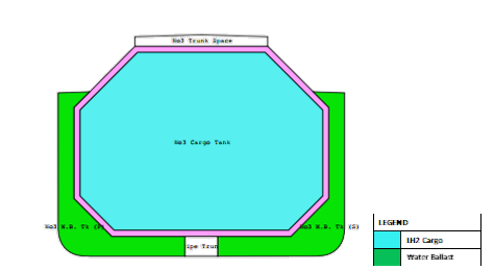
Figure 3. Cargo tank arrangement midship section
The cargo containment system has also been represented through detailed design views, supporting the assessment of its integration within the overall vessel concept.
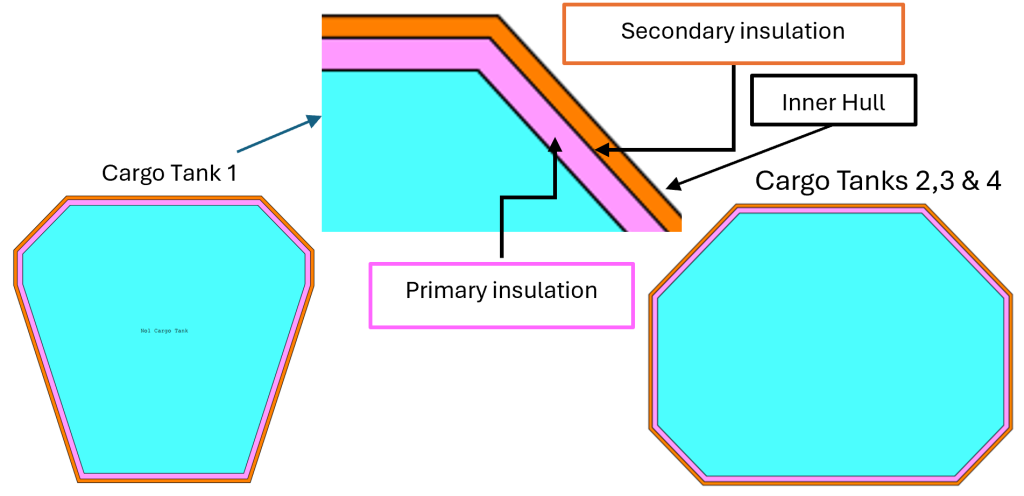
Figure 4. LH₂ cargo containment system representation
Recommendations from hazard identification activities are being integrated directly into the evolving engineering design, supporting a safety-by-design approach and the preparation of future Hazard and Operability studies.
The next stage will focus on refining the propulsion system. Project partners are assessing the most suitable propeller solution, considering service speed, compatibility with the existing main engine, propeller immersion, operational efficiency and boil-off gas management.
Through this progress, LH₂CRAFT continues to demonstrate how advanced vessel design, digital modelling and rigorous safety assessment can support the next generation of hydrogen transportation in the maritime sector.