The SAFeCRAFT and LH2CRAFT projects successfully co-organised a dedicated workshop on Sustainable Alternative Marine Fuels, hosted by the School of Naval Architecture and Marine Engineering of the National Technical University of Athens (NTUA). The event took place on the 25th of November 2025 and brought together more than 80 participants from academia, industry, research organisations, and the wider maritime community.

The workshop aimed to foster dialogue on the transition towards zero-emission maritime transport and to highlight the technological, regulatory, and operational challenges associated with the adoption of next-generation marine fuels. The strong attendance and active engagement demonstrated the growing interest and momentum across sectors in advancing safe and sustainable fuel solutions for the maritime industry.
The programme featured presentations from experts representing both projects and industry partners:
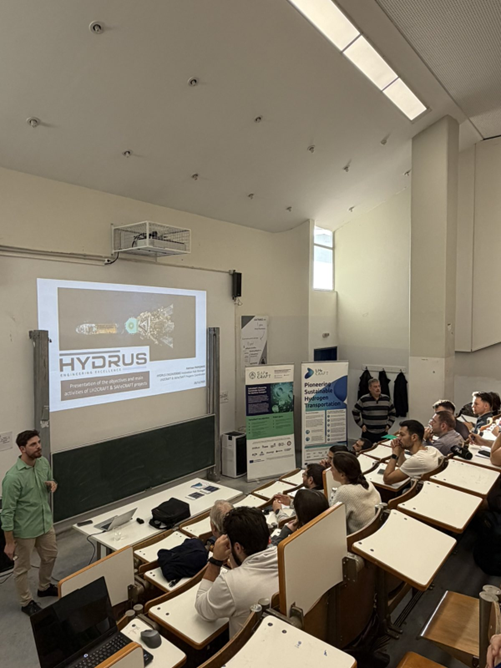
- Astrinos Papadakis (HYDRUS Engineering)
Presented an overview of the SAFeCRAFT and LH2CRAFT projects, outlining objectives, progress, and shared goals.
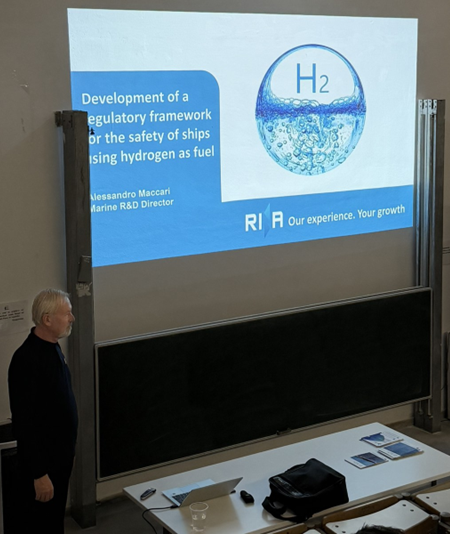
- Alessandro Maccari (RINA.)
Provided an in-depth analysis of the current regulatory framework for alternative fuels in shipping, including safety requirements and compliance considerations.
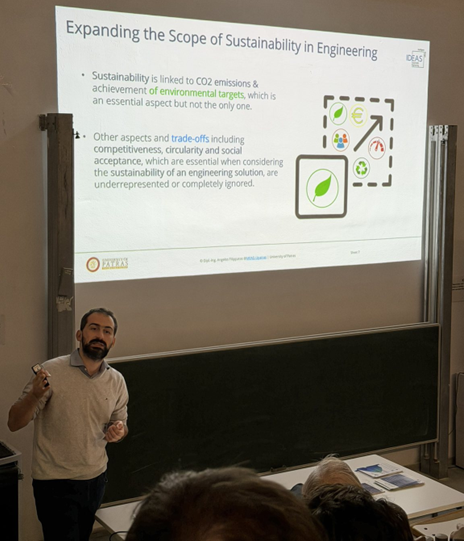
- Professor Angelos Filippatos (University of Patras)
Discussed holistic sustainability approaches and the role of emerging fuel technologies in supporting maritime decarbonisation.
- Vasileios G. Petousis (Seanergy Maritime Holdings Corp.)
Offered a shipowner’s perspective on the opportunities and challenges linked to the adoption of new alternative fuels.
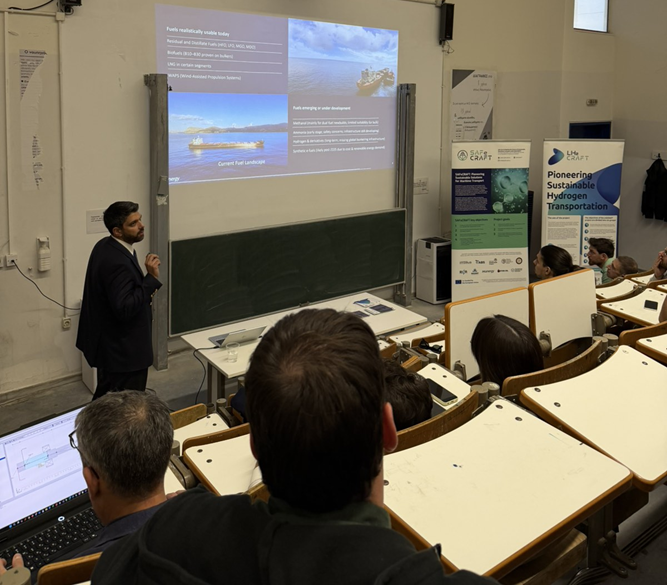
The workshop addressed a broad range of topics including hydrogen, ammonia, methanol, LOHC technologies, safety considerations, tank design adaptations, sustainability drivers, and practical industry experiences. Discussions emphasised the importance of coordinated action and cross-project collaboration to accelerate the deployment of alternative fuels.
The event highlighted the strong alignment between SAFeCRAFT and LH2CRAFT, reinforcing the value of collaboration between EU-funded initiatives working toward shared goals in maritime decarbonisation. The workshop served as a platform for knowledge exchange, networking, and the identification of future avenues for joint activities.
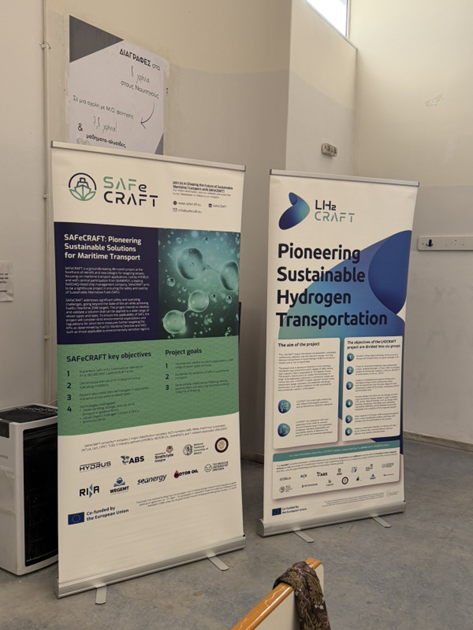
We would like to express our sincere appreciation to School of Naval Architecture and Marine Engineering of the National Technical University of Athens (NTUA) for hosting the workshop and for their excellent support and collaboration, as well as to all speakers for their valuable contributions.
The SAFeCRAFT project has received funding from the European Union’s Horizon Europe research and innovation programme under grant agreement No. 101138411. UK participation is supported by UK Research and Innovation (UKRI) under the Horizon Europe Guarantee [grant number 10110519].
The LH2CRAFT project has received funding from the European Union’s Horizon Europe research and innovation programme under grant agreement No. 101111972. UK participation in LH2CRAFT is funded by UK Research and Innovation (UKRI) under the UK government’s Horizon Europe Guarantee [grant numbers 10082044 and 10070575].